
.jpg?alt=media&token=73bc6f93-ad52-4509-8f65-2a0a902b1665)
At 35,000 Feet: A Take on Air Hostess Uniforms – Style Over Safety?

During my recent travels on different airlines, I found myself observing something I had never really paid much attention to before — the uniforms worn by female cabin crew.
Beautiful sarees, smart fitted dresses, perfectly coordinated scarves, elegant footwear and impeccable grooming. Every airline seemed to have its own distinctive style, carefully designed to reflect its brand identity.
And then I remembered an experience from my Kailash Yatra in 2017.
We were travelling on a small Nepalese aircraft, flying through the challenging Himalayan terrain. What caught my attention was the female cabin crew member's attire — jeans and a T-shirt! No elaborate draping, fitted skirts or glamorous accessories. Just simple, seemingly practical clothing. I don’t remember which airline it was, but that image has stayed with me. It made me wonder: Was it simply a relaxed dress code, or was there a practical reason behind it?
So whenever I fly, I try to notice the air hostesses' uniforms and, more importantly, how practical the elegant uniforms we see on commercial airlines are when things don't go as planned, such as in an emergency.
It was a passing thought, but one that became increasingly interesting.
_______________________________________________________
The Other Side of an Air Hostess's Job
For most passengers, the cabin crew represents the welcoming face of an airline. We associate them with warm smiles, courteous service, hospitality and impeccable presentation.
But there is another side to their profession that we rarely think about.
A flight attendant is, first and foremost, a trained aviation safety professional. In an emergency, she may have to open an aircraft exit, operate evacuation equipment, assist frightened passengers, handle firefighting equipment or help someone who has collapsed in the aisle. She may have to kneel, crawl, stretch, climb or move quickly through a confined space. And all this while wearing the same uniform in which she welcomed passengers aboard.
That made me wonder whether the clothes designed to make cabin crew look graceful are equally suited to more critical movements their jobs may demand.
Could a saree drape become inconvenient? Could a fitted skirt restrict movement? Would formal footwear provide adequate stability?
I certainly wouldn't conclude that a particular uniform is unsafe merely by looking at it.
But these seem like reasonable questions for any frequent traveller to ask.
_______________________________________________________
A Look at the Cabin Crew Uniforms of Indian Airlines
India's airlines present an interesting variety of uniform styles. Some celebrate traditional elegance, while others favour contemporary corporate styling or more casual, comfort-oriented designs.
I decided to make a simple comparison of the uniforms of major Indian passenger airlines, looking at their visible design, apparent freedom of movement and footwear.
Disclaimer: The following are personal impressions of design practicality, not certified safety scores. They do not measure emergency performance, fabric fire resistance or regulatory compliance.
_______________________________________________________
Air India: Can Tradition Evolve?
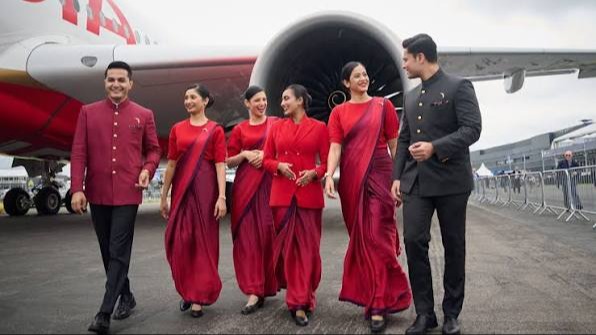
Let us look at Air India first, which is India’s oldest airline, and its saree has been one of the most recognisable symbols of Indian aviation for decades. There is something timeless about that image. It reflects our cultural identity and lends Indian aviation a distinctive elegance.
The airline's redesigned uniforms, created by Manish Malhotra, offer an interesting interpretation of tradition. The ready-to-wear saree, coordinated with contemporary elements and trouser options, represents an attempt to modernise without abandoning heritage.
But I wonder how practical the complete ensemble would be for emergency movements. Does the drape remain secure? Does it allow unrestricted climbing or kneeling? How suitable is the footwear?
Opinion: I think airlines must go beyond how beautiful the dress looks.
_______________________________________________________
Air India Express: A Contemporary Indian Identity, with Designs Inspired by Five States
 Air India Express has introduced new uniforms for its cabin crew and frontline staff, and the new look takes inspiration from India's rich textile heritage. The Tata Group-owned airline launched the uniforms on September 1.
The uniforms draw inspiration from Tamil Nadu's Kanjeevaram, Himachal Pradesh's Pattu, Gujarat's Patola, Assam's Gamosa and Madhya Pradesh's Bagh.
The Air India Express female cabin crew uniform is a modern teal tunic-style top inspired by traditional Indian kurtis, paired with navy blue pants, a colourful patterned scarf and black shoes.
Opinion: Perhaps the future of airline uniforms lies in such experimentation — retaining a cultural signature while allowing greater freedom of movement.
_______________________________________________________
IndiGo and SpiceJet: The Familiar Corporate Look
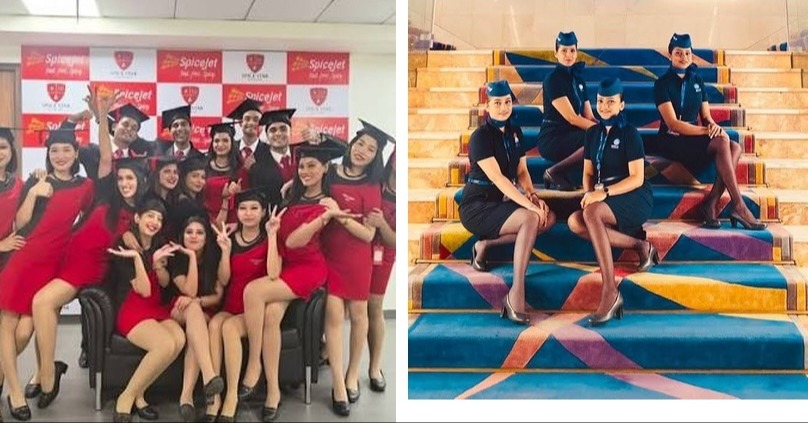
IndiGo and SpiceJet have built distinctive visual identities around smart, coordinated cabin crew attire. Their fitted dresses look professional and polished. They create a consistent brand image and are immediately recognisable.
But fitted clothing raises an interesting question.
How easily can someone wearing such a dress squat, kneel, stretch or climb?
Perhaps the garments are designed with enough flexibility to accommodate these movements. Perhaps the fabrics have properties that are not obvious to passengers.
Opinion: We simply cannot judge from appearance. And that, in itself, is part of the larger question. We see airline uniforms every time we fly, but know very little about the practical considerations behind their design.
_______________________________________________________
Akasa Air: When Comfort Becomes Part of the Brand
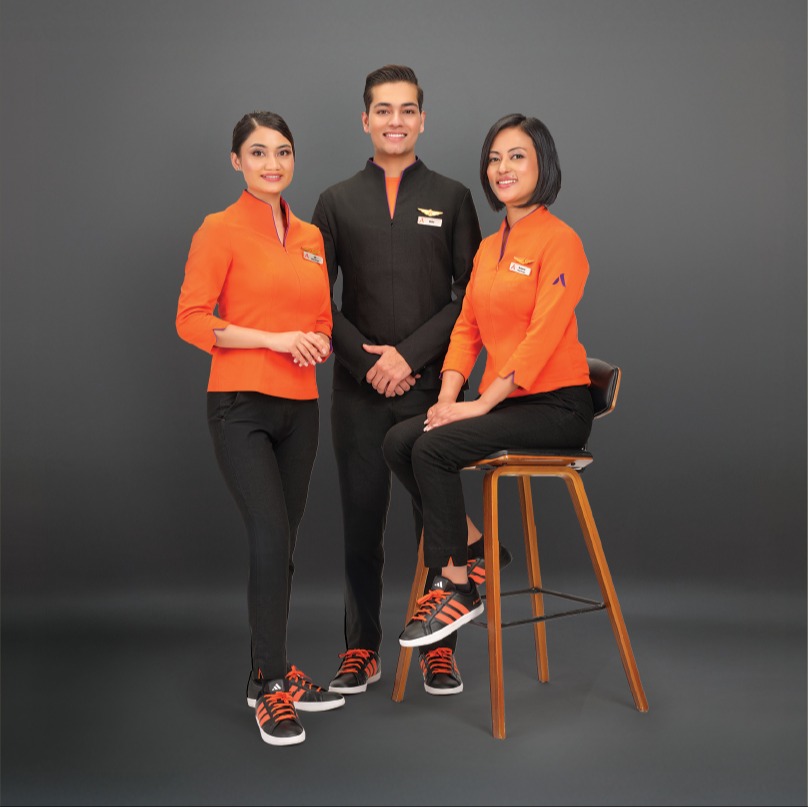
Amid all these airlines, Akasa Air stands out immediately. Its cabin crew uniforms feature contemporary jackets, trousers and sneakers. The airline has highlighted comfort, flexibility and ergonomic considerations in its uniform design.
According to the company, the trouser and jacket fabric was specially made for Akasa Air, using recycled polyester from PET bottle plastic salvaged from marine waste.
One question I have: is recycled polyester fabric fire-resistant?
I find the sneakers particularly interesting. They suggest that comfort need not be something cabin crew must compromise for the sake of appearance.
Of course, sneakers are not automatically safer in every situation. Their grip, fit, material and suitability for evacuation procedures also matter.
Opinion: A balance of appearance, comfort and practicality.
_______________________________________________________
What Are Airlines Around the World Doing?
Looking beyond India, airlines have taken different approaches to balancing appearance, comfort, tradition and practicality.
Japan Airlines introduced trousers as an option for female cabin crew in 2020, incorporating design changes intended to improve ease of movement.
KLM, the Dutch airline, began allowing approved sneakers with its uniforms in 2024, recognising the importance of employee comfort and well-being.
Virgin Atlantic has moved away from some traditional gender-based uniform expectations, offering trousers and flat shoes to female cabin crew and subsequently expanding uniform choice.
Brussels Airlines has also introduced contemporary uniforms with options such as trainers, placing greater emphasis on employee feedback and comfort.
Meanwhile, Vietnam Airlines continues to celebrate its traditional áo dài, a long tunic worn over trousers. Singapore Airlines and Malaysia Airlines retain their iconic sarong kebaya uniforms, preserving their distinctive cultural identities.
What I find interesting is not that one style is necessarily better than another. Rather, airlines are approaching the same challenge in different ways.
_______________________________________________________
Some questions they must consider while designing the uniform, which I guess airlines must be doing.
1. High Heels at High Altitudes? Footwear is perhaps the most visible example of the difference between fashion and function. High heels have traditionally been associated with elegance and formal professional dressing. They can look attractive with a uniform. But I wonder whether they are the most practical footwear for someone who spends long hours standing, walking through narrow aisles and occasionally working in turbulent conditions.
2. What About the Fabric? While looking at uniform styles, another thought occurred to me. We often discuss the appearance and comfort of clothing, but rarely its behaviour under unusual conditions. What happens to a uniform fabric when exposed to extreme heat? Could certain materials melt or shrink? How easily could loose fabric catch on equipment?
3. Is There a Gender Question Here? Another aspect of this discussion is difficult to ignore. Male cabin crew generally wear trousers, shirts, jackets and practical shoes.
Female cabin crew, depending on the airline, may wear sarees, skirts, fitted dresses or formal footwear, often accompanied by more elaborate grooming expectations.
Yet both are trained to perform substantially similar emergency responsibilities. Why, then, have women's uniforms traditionally carried a greater emphasis on glamour?
_______________________________________________________
Just Some Food for Thought...
Airlines invest enormous resources in aircraft safety, emergency procedures, crew training and operational standards. I am sure uniform design involves considerations that passengers like me may never see.
But it would be fascinating to know how airlines evaluate their uniforms beyond appearance and everyday comfort.
After all, at 35,000 feet, being dressed to impress is wonderful. But being dressed to save could be far more important.
_______________________________________________________
Rakhi Sunil Kumar
Chief Editor, StoryBerrys
Comments (0)
Please login to share your comments.