
Tai Chi – The Gentle Exercise That Taught Me the Power of Slowing Down

Tai Chi – The Gentle Exercise That Taught Me the Power of Slowing Down

Avatar
rakhi sunil kumar

3 Aug 20267 min read

Published in storieseditoriallatestwellness

"Sometimes the most meaningful changes in life don't come from doing more. They come from slowing down and paying attention."

Until recently, I believed that a good workout had to leave me drenched in sweat and completely exhausted. Like many people, I associated fitness with running, lifting weights, or high-intensity workouts. If an exercise looked easy, I assumed it couldn't possibly be effective. 

Then, quite unexpectedly, I discovered Tai Chi.

Not through a fitness magazine or a health expert, but through Social Media.
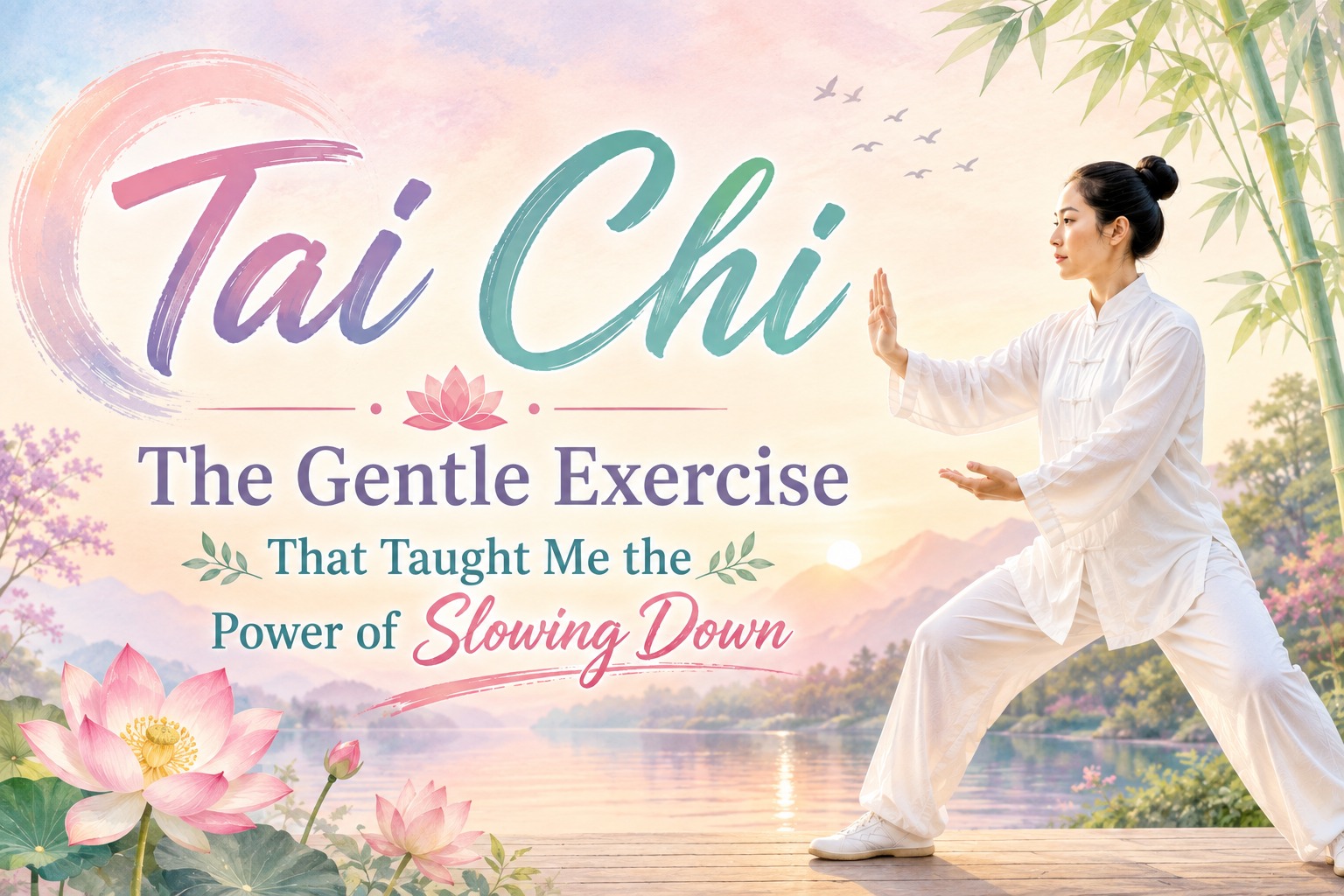

As I scrolled through my feed, I kept coming across videos of people practicing Tai Chi in peaceful parks. They moved slowly and gracefully, almost as if they were dancing with the wind. There was something incredibly calming about watching them. At first, I couldn't understand how such slow movements could qualify as exercise. It looked beautiful, but I wondered, "Can this really improve fitness?"

The curiosity stayed with me for days. Eventually, I decided to stop wondering and simply give it a try.

Today, after four weeks of practicing Tai Chi regularly, I can honestly say it has been one of the most rewarding fitness decisions I've made.

A Different Kind of Exercise
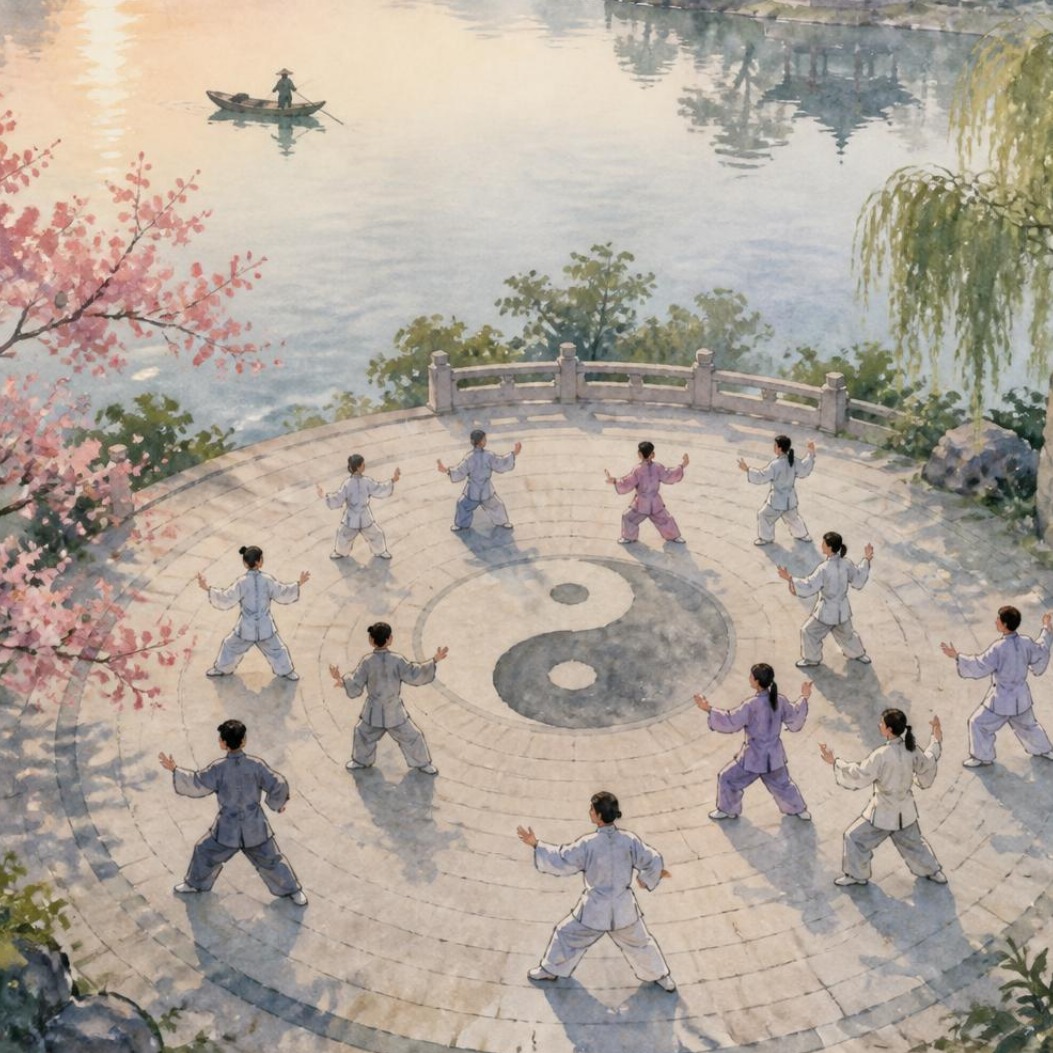
Tai Chi, also known as Tai Chi Chuan, originated in ancient China as a martial art. Over the centuries, it evolved into a gentle form of exercise that combines slow, flowing movements with controlled breathing and mindfulness. It is often described as "meditation in motion," and after experiencing it firsthand, I understand exactly why.

Unlike conventional workouts that focus on speed, repetition, or burning calories, Tai Chi encourages you to slow down. Every movement is deliberate. Every breath has a rhythm. Instead of rushing from one exercise to another, you learn to become aware of your body and your breathing.

In today's fast-paced world, that alone feels refreshing.

My First Few Sessions

I'll admit, the first few sessions weren't as easy as they looked in those Instagram videos. Moving slowly actually required a surprising amount of concentration. Coordinating my breathing with each movement, maintaining balance while shifting my weight, and remembering the sequence of postures challenged me more than I expected.
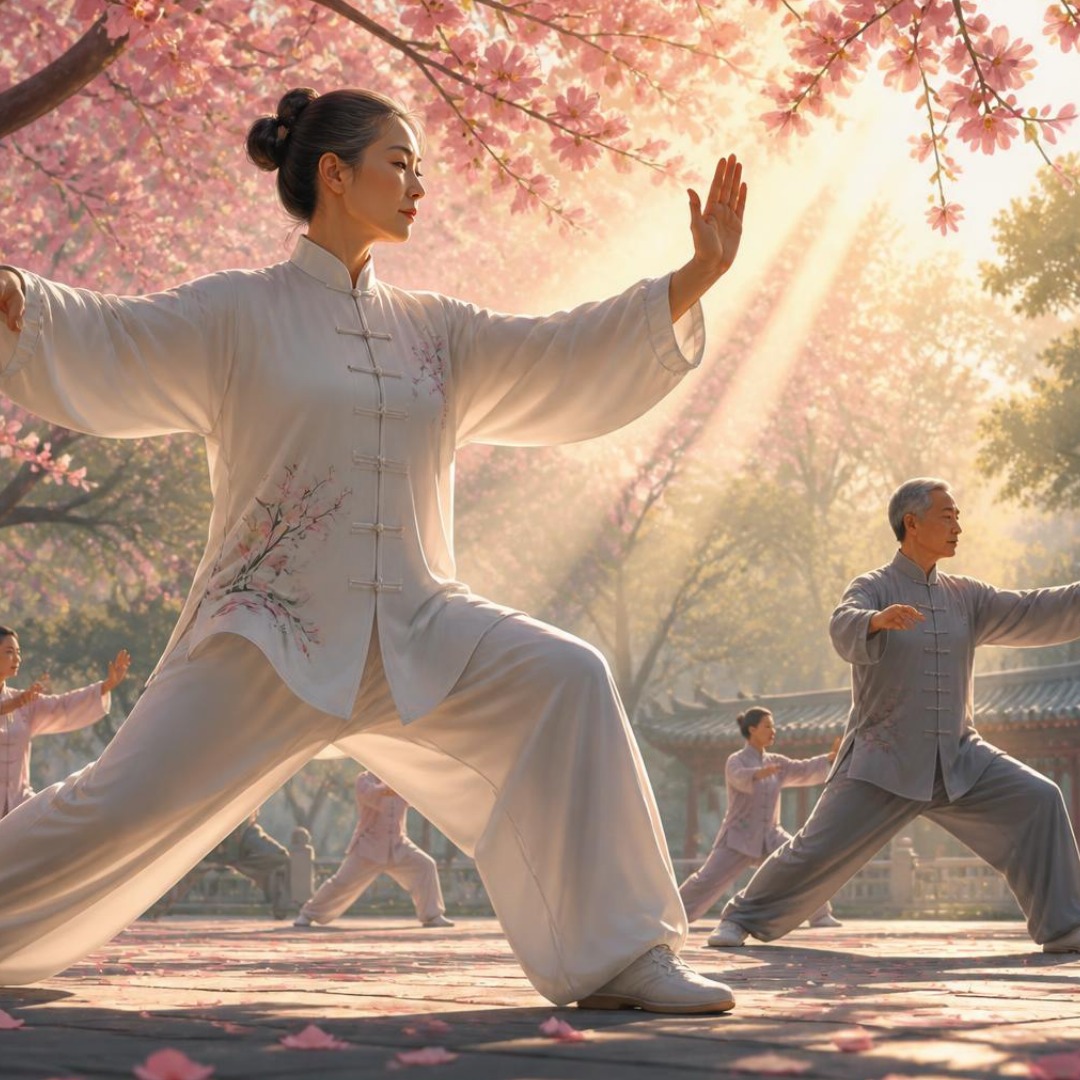

There were moments when I lost my balance, forgot what came next, or felt awkward trying to imitate the graceful movements I'd seen online.

But something interesting happened.

Instead of feeling discouraged, I found myself enjoying the learning process.

Tai Chi doesn't make you compete with anyone else. There's no stopwatch, no leaderboard, and no pressure to perform. Every practice simply encourages you to become a little better than you were yesterday.

That gentle approach kept me coming back.

The Confidence I Didn't Expect

Perhaps the biggest surprise wasn't the physical improvement—it was the confidence the practice gave me.

Each session lasts around twenty to thirty minutes. Completing it may not sound like a huge achievement, but every time I finished a session, I felt quietly proud of myself.

It wasn't the excitement that follows an intense workout. It was something calmer and deeper. A simple thought would cross my mind:

"I did it."
"I stayed focused."
"I completed today's session."

That feeling is difficult to describe unless you've experienced it. It's a quiet confidence that comes from showing up for yourself consistently. Every completed session became a small promise I had kept to myself.

Those small victories began adding up.

And with every passing week, I started believing that I could build healthy habits—not through force or discipline alone, but through consistency and patience.

The Physical Benefits

Although Tai Chi looks gentle, it engages the entire body.

After four weeks, I noticed several changes.

My posture improved. I sit at a desk for long hours, and I hadn't realized how much tension I carried in my shoulders and neck. The slow, controlled movements helped release that stiffness.

My balance also became noticeably better. Standing on one leg during certain movements initially felt challenging, but gradually it became easier.

I also found that my body felt more flexible. The gentle stretching of the spine, hips, knees, and shoulders reduced the stiffness that often comes from sitting for extended periods.

Unlike high-impact workouts that sometimes leave me feeling sore, Tai Chi leaves me feeling refreshed and energized.

The Mental Benefits

The greatest transformation, however, has been mental.

Tai Chi offers something many of us rarely experience—a chance to simply slow down.

During practice, I found myself focusing entirely on the present moment. Instead of worrying about tomorrow or replaying yesterday's conversations, my attention stayed on my breathing and my movements.

For twenty or thirty minutes, the noise inside my head became quieter.

After each session, I felt calmer.

Not because my problems had disappeared, but because my mind had become clearer.

That feeling stayed with me long after the practice ended. 

Why Tai Chi Works

One reason Tai Chi is so effective is that it combines three important elements:

  • Gentle, flowing movements

  • Deep, natural breathing

  • Mindful awareness

Together, these improve not only physical fitness but also emotional well-being.

Scientific studies have shown that regular Tai Chi practice can improve balance, flexibility, muscle strength, cardiovascular health, sleep quality, and stress management. It is frequently recommended for older adults because it reduces the risk of falls, but its benefits extend far beyond any particular age group.

Whether you're in your twenties or your seventies, Tai Chi adapts to your body's abilities.

That is one of its greatest strengths.

More Than Exercise

What I appreciate most about Tai Chi is that it doesn't ask you to become someone else.

It simply asks you to be present.
There is no competition.
No comparison.
No pressure to be perfect.

Some days my movements flow naturally. Other days I struggle with balance or concentration. Yet every session teaches me something.

Some days it's patience.
Other days it's persistence.
And occasionally, it's simply learning to breathe.

I've come to realize that Tai Chi isn't just an exercise routine. It's a practice that quietly influences everyday life.

I've become more patient in stressful situations. I catch myself taking deeper breaths when work becomes overwhelming. Even my posture while sitting or walking has improved because Tai Chi constantly reminds me to stay balanced and relaxed.

Those lessons extend far beyond the exercise mat.

A Practice Anyone Can Begin

One of the reasons I would recommend Tai Chi to almost anyone is its simplicity.

You don't need expensive equipment.
You don't need exceptional fitness.
You don't even need a gym membership.

All you need is a little space, comfortable clothing, and the willingness to begin.

If you're new, don't worry about performing every movement perfectly. I certainly didn't.

The beauty of Tai Chi lies in showing up consistently.

Each session becomes a little easier.
Each movement becomes a little smoother.
Each breath becomes a little deeper.

Final Thoughts

Looking back, I'm grateful that an ordinary Reel introduced me to Tai Chi. What began as a simple curiosity has become one of the most enjoyable parts of my daily routine.

In just four weeks, I've experienced better balance, improved flexibility, reduced stress, and a greater sense of calm. For thay reason, it clicked me today, why I not share on this platform.

Those who are on gym person or yoga , Tai Chi is an option you must try surely. Sometimes, the best exercise isn't the one that leaves you exhausted. It's the one that leaves you feeling calmer, more confident, and a little more connected to yourself.

Tai Chi practice videos are available on YouTube. They are simple to follow.

In a world that constantly encourages us to move faster, Tai Chi gently teaches us the opposite—that slowing down can make us stronger.

And maybe that's its greatest lesson of all.

Rakhi Sunil Kumar
Chief Editor, StoryBerrys


Comments (0)

Please login to share your comments.


Storyberrys — Discover & Share Creative Stories

Read short stories, poetry, art and more — from a community of storytellers, in English and Hindi.

© Copyright 2026 Storyberrys Digital Services LLP. All rights reserved.

Tai Chi – The Gentle Exercise That Taught Me the Power of Slowing Down

Tai Chi – The Gentle Exercise That Taught Me the Power of Slowing Down

Avatar
rakhi sunil kumar

3 Aug 20267 min read

Published in storieseditoriallatestwellness

"Sometimes the most meaningful changes in life don't come from doing more. They come from slowing down and paying attention."

Until recently, I believed that a good workout had to leave me drenched in sweat and completely exhausted. Like many people, I associated fitness with running, lifting weights, or high-intensity workouts. If an exercise looked easy, I assumed it couldn't possibly be effective. 

Then, quite unexpectedly, I discovered Tai Chi.

Not through a fitness magazine or a health expert, but through Social Media.


As I scrolled through my feed, I kept coming across videos of people practicing Tai Chi in peaceful parks. They moved slowly and gracefully, almost as if they were dancing with the wind. There was something incredibly calming about watching them. At first, I couldn't understand how such slow movements could qualify as exercise. It looked beautiful, but I wondered, "Can this really improve fitness?"

The curiosity stayed with me for days. Eventually, I decided to stop wondering and simply give it a try.

Today, after four weeks of practicing Tai Chi regularly, I can honestly say it has been one of the most rewarding fitness decisions I've made.

A Different Kind of Exercise

Tai Chi, also known as Tai Chi Chuan, originated in ancient China as a martial art. Over the centuries, it evolved into a gentle form of exercise that combines slow, flowing movements with controlled breathing and mindfulness. It is often described as "meditation in motion," and after experiencing it firsthand, I understand exactly why.

Unlike conventional workouts that focus on speed, repetition, or burning calories, Tai Chi encourages you to slow down. Every movement is deliberate. Every breath has a rhythm. Instead of rushing from one exercise to another, you learn to become aware of your body and your breathing.

In today's fast-paced world, that alone feels refreshing.

My First Few Sessions

I'll admit, the first few sessions weren't as easy as they looked in those Instagram videos. Moving slowly actually required a surprising amount of concentration. Coordinating my breathing with each movement, maintaining balance while shifting my weight, and remembering the sequence of postures challenged me more than I expected.


There were moments when I lost my balance, forgot what came next, or felt awkward trying to imitate the graceful movements I'd seen online.

But something interesting happened.

Instead of feeling discouraged, I found myself enjoying the learning process.

Tai Chi doesn't make you compete with anyone else. There's no stopwatch, no leaderboard, and no pressure to perform. Every practice simply encourages you to become a little better than you were yesterday.

That gentle approach kept me coming back.

The Confidence I Didn't Expect

Perhaps the biggest surprise wasn't the physical improvement—it was the confidence the practice gave me.

Each session lasts around twenty to thirty minutes. Completing it may not sound like a huge achievement, but every time I finished a session, I felt quietly proud of myself.

It wasn't the excitement that follows an intense workout. It was something calmer and deeper. A simple thought would cross my mind:

"I did it."
"I stayed focused."
"I completed today's session."

That feeling is difficult to describe unless you've experienced it. It's a quiet confidence that comes from showing up for yourself consistently. Every completed session became a small promise I had kept to myself.

Those small victories began adding up.

And with every passing week, I started believing that I could build healthy habits—not through force or discipline alone, but through consistency and patience.

The Physical Benefits

Although Tai Chi looks gentle, it engages the entire body.

After four weeks, I noticed several changes.

My posture improved. I sit at a desk for long hours, and I hadn't realized how much tension I carried in my shoulders and neck. The slow, controlled movements helped release that stiffness.

My balance also became noticeably better. Standing on one leg during certain movements initially felt challenging, but gradually it became easier.

I also found that my body felt more flexible. The gentle stretching of the spine, hips, knees, and shoulders reduced the stiffness that often comes from sitting for extended periods.

Unlike high-impact workouts that sometimes leave me feeling sore, Tai Chi leaves me feeling refreshed and energized.

The Mental Benefits

The greatest transformation, however, has been mental.

Tai Chi offers something many of us rarely experience—a chance to simply slow down.

During practice, I found myself focusing entirely on the present moment. Instead of worrying about tomorrow or replaying yesterday's conversations, my attention stayed on my breathing and my movements.

For twenty or thirty minutes, the noise inside my head became quieter.

After each session, I felt calmer.

Not because my problems had disappeared, but because my mind had become clearer.

That feeling stayed with me long after the practice ended. 

Why Tai Chi Works

One reason Tai Chi is so effective is that it combines three important elements:

  • Gentle, flowing movements

  • Deep, natural breathing

  • Mindful awareness

Together, these improve not only physical fitness but also emotional well-being.

Scientific studies have shown that regular Tai Chi practice can improve balance, flexibility, muscle strength, cardiovascular health, sleep quality, and stress management. It is frequently recommended for older adults because it reduces the risk of falls, but its benefits extend far beyond any particular age group.

Whether you're in your twenties or your seventies, Tai Chi adapts to your body's abilities.

That is one of its greatest strengths.

More Than Exercise

What I appreciate most about Tai Chi is that it doesn't ask you to become someone else.

It simply asks you to be present.
There is no competition.
No comparison.
No pressure to be perfect.

Some days my movements flow naturally. Other days I struggle with balance or concentration. Yet every session teaches me something.

Some days it's patience.
Other days it's persistence.
And occasionally, it's simply learning to breathe.

I've come to realize that Tai Chi isn't just an exercise routine. It's a practice that quietly influences everyday life.

I've become more patient in stressful situations. I catch myself taking deeper breaths when work becomes overwhelming. Even my posture while sitting or walking has improved because Tai Chi constantly reminds me to stay balanced and relaxed.

Those lessons extend far beyond the exercise mat.

A Practice Anyone Can Begin

One of the reasons I would recommend Tai Chi to almost anyone is its simplicity.

You don't need expensive equipment.
You don't need exceptional fitness.
You don't even need a gym membership.

All you need is a little space, comfortable clothing, and the willingness to begin.

If you're new, don't worry about performing every movement perfectly. I certainly didn't.

The beauty of Tai Chi lies in showing up consistently.

Each session becomes a little easier.
Each movement becomes a little smoother.
Each breath becomes a little deeper.

Final Thoughts

Looking back, I'm grateful that an ordinary Reel introduced me to Tai Chi. What began as a simple curiosity has become one of the most enjoyable parts of my daily routine.

In just four weeks, I've experienced better balance, improved flexibility, reduced stress, and a greater sense of calm. For thay reason, it clicked me today, why I not share on this platform.

Those who are on gym person or yoga , Tai Chi is an option you must try surely. Sometimes, the best exercise isn't the one that leaves you exhausted. It's the one that leaves you feeling calmer, more confident, and a little more connected to yourself.

Tai Chi practice videos are available on YouTube. They are simple to follow.

In a world that constantly encourages us to move faster, Tai Chi gently teaches us the opposite—that slowing down can make us stronger.

And maybe that's its greatest lesson of all.

Rakhi Sunil Kumar
Chief Editor, StoryBerrys


Comments (0)

Please login to share your comments.


Storyberrys — Discover & Share Creative Stories

Read short stories, poetry, art and more — from a community of storytellers, in English and Hindi.

© Copyright 2026 Storyberrys Digital Services LLP.

All rights reserved.