
.png?alt=media&token=cd846596-817b-463e-8296-b6889160e4eb)
The $3 Trillion Echo Chamber: Unpacking Nvidia’s "Circular Economy"
When we look at the explosive growth of the Artificial Intelligence sector, the numbers are staggering. Trillion-dollar market caps, multi-billion dollar funding rounds, and an insatiable hunger for compute power. But a closer look at the flow of capital suggests that this booming economy might be less of a linear climb and more of a closed loop—a "circular economy" designed to inflate valuations and hide risk.
At the center of this web sits Nvidia, the undisputed king of AI hardware. But as recent analyses highlight, Nvidia isn’t just selling the shovels during a gold rush; in many cases, they are also financing the miners.
The Financial Merry-Go-Round
The core mechanism of this circular economy is a sophisticated money-moving operation that creates the appearance of organic explosive growth. The pattern is distinct:
Investment: Big Tech giants and Nvidia invest billions of dollars into AI startups (like OpenAI or CoreWeave).
Revenue: These startups, flush with cash, immediately turn around and spend that capital on Nvidia’s H100 GPUs.
Booking: Nvidia records this as massive revenue growth, boosting its stock price and giving it more capital to invest in the next round of startups.
.png?alt=media&token=1d222c8f-2515-4309-86df-40871f743f43) It is a perpetual motion machine of capital. For instance, Nvidia’s heavy investment in CoreWeave—a cloud provider—essentially functions as Nvidia paying itself. CoreWeave uses Nvidia's investment to buy Nvidia chips, booking revenue for the chipmaker while establishing CoreWeave’s market dominance.
It is a perpetual motion machine of capital. For instance, Nvidia’s heavy investment in CoreWeave—a cloud provider—essentially functions as Nvidia paying itself. CoreWeave uses Nvidia's investment to buy Nvidia chips, booking revenue for the chipmaker while establishing CoreWeave’s market dominance.
The "Hidden Debt" Machine: Enter the SPV
Perhaps the most ingenious—and concerning—aspect of this economy is how debt is managed, or rather, hidden. The primary tool here is the Special Purpose Vehicle (SPV).
Take the recent case of Elon Musk’s xAI. To acquire $20 billion worth of hardware without destroying its balance sheet, xAI didn't buy the chips directly. Instead, an SPV was created. This shell entity raised the funds (partly from Nvidia) and used them to purchase the GPUs. xAI then simply "rents" the compute power from the SPV.
Why do this?
For the Startup (xAI): The massive debt stays off their main books.
For Nvidia: They secure $20 billion in guaranteed sales instantly.
The Risk: The risk is transferred to the SPV investors. If the value of those GPUs crashes—which is likely, given the speed of tech obsolescence—the SPV is left holding the bag on depreciating assets.
.png?alt=media&token=a8031e3f-fe7c-4edf-899d-11ff47094326) The Geopolitical Loophole
The Geopolitical Loophole
The circular economy doesn’t just skirt financial norms; it also navigates geopolitical barriers. The US government has imposed strict sanctions preventing the sale of top-tier AI chips to countries like China (classified as "Tier 3").
However, the market has found a workaround through "Tier 1" nations. The video highlights Nebius, a company based in Amsterdam (a Tier 1 jurisdiction). Because of its location, Nebius can legally purchase unrestricted quantities of Nvidia’s most powerful chips. Once the chips are in Amsterdam, Nebius can legally sell "cloud compute services" to customers in China.
The physical chips never cross the border, but the compute power—the actual product—does. This effectively bypasses the spirit of the sanctions while adhering to the letter of the law. Nvidia, once again, profits twice: first from selling the chips to Nebius, and second from its equity stake in the company.
Is the Bubble About to Burst?
The fundamental question remains: Is the demand real?
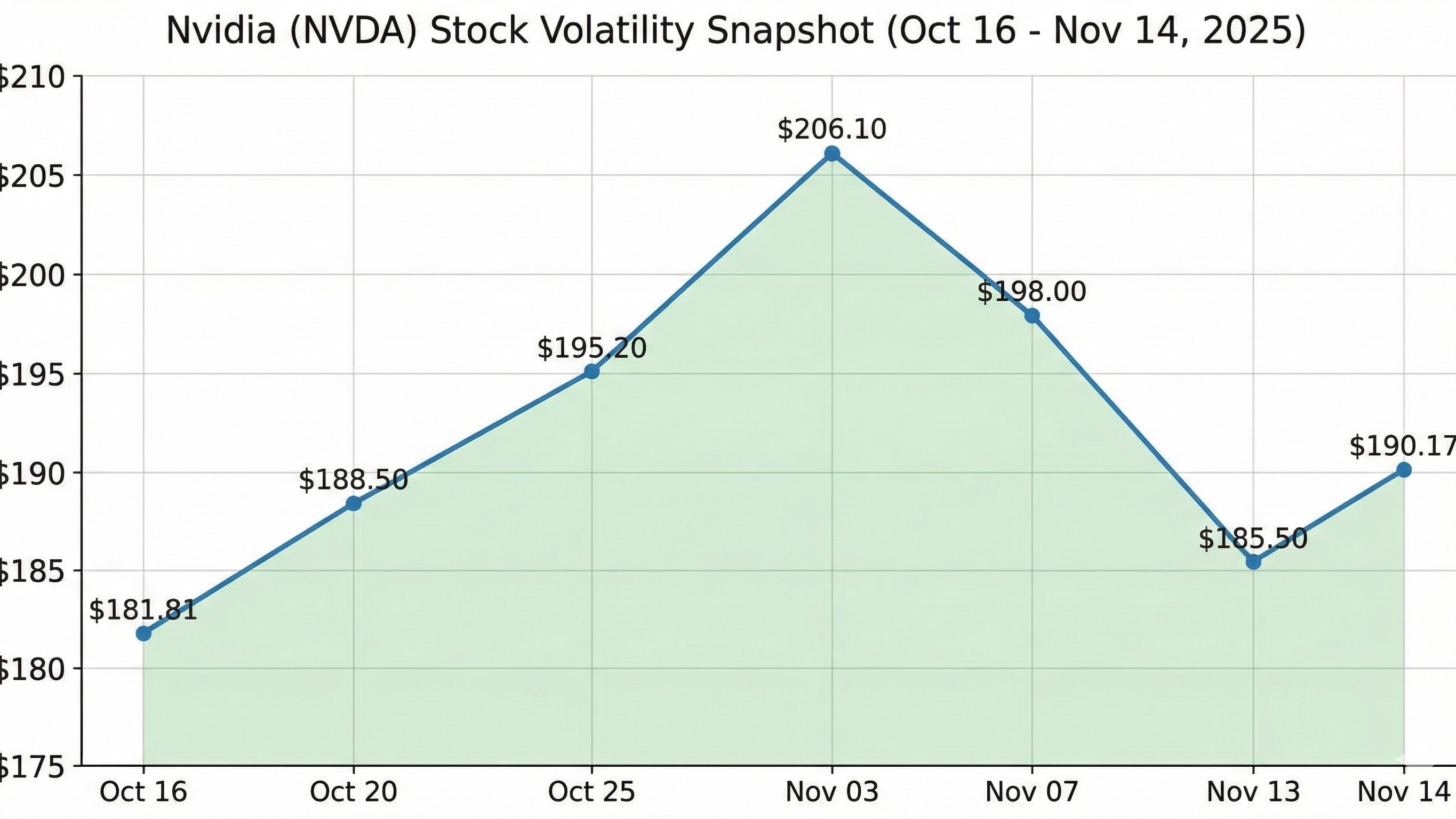
Critics argue that much of the current demand for GPUs is artificial—fueled by venture capital and financial engineering rather than actual consumer revenue. With 95% of GenAI pilots failing to reach production and 80% of companies reporting no bottom-line impact from AI adoption, the gap between spending on AI and earning from AI is widening.
We are witnessing a market where the infrastructure is being built at a frantic pace, funded by the very companies building it. While this "circular economy" has successfully propped up valuations in the short term, history suggests that when the music stops, the silence can be deafening.
.png?alt=media&token=6cb4232a-df65-42cd-8d0f-c0409455bc11)
This chart visualizes the "green paradox" of AI. While AI technology holds immense promise for optimizing energy grids, reducing water usage in agriculture, and lowering global emissions (green bars), its current operational footprint is massive (red bars). Data centers consume vast amounts of energy and water for cooling, and training large models has a significant carbon cost. This visual highlights the urgent need to balance the potential benefits with the immediate environmental costs.
Comments (0)
Please login to share your comments.